


- Incoming Assistant Professor of Law Jake Gao has published a new paper on autonomous vehicle liability in the Santa Clara Law Review
- The paper examines how algorithmic aversion distorts tort liability for AI-driven technologies, with significant implications for the legal regulation of self-driving cars
- Gao will join the University of the Pacific McGeorge School of Law faculty on July 1, 2026, strengthening the school's law-and-technology focus
Paper Title: Formal Neutrality and Unequal Liability: How Algorithmic Aversion Distorts Liability for Algorithmic Torts
Published In: Santa Clara Law Review
Institution: University of the Pacific McGeorge School of Law, Sacramento, CA
Start Date: July 1, 2026
As autonomous vehicles edge closer to mainstream adoption across California and the nation, the legal frameworks governing their liability are struggling to keep pace. A new paper from an incoming faculty member at the University of the Pacific McGeorge School of Law offers one of the most nuanced examinations to date of how existing tort law may be fundamentally ill-equipped to handle accidents caused by algorithmic decision-making — and why that matters for every driver, passenger, and pedestrian on the road.
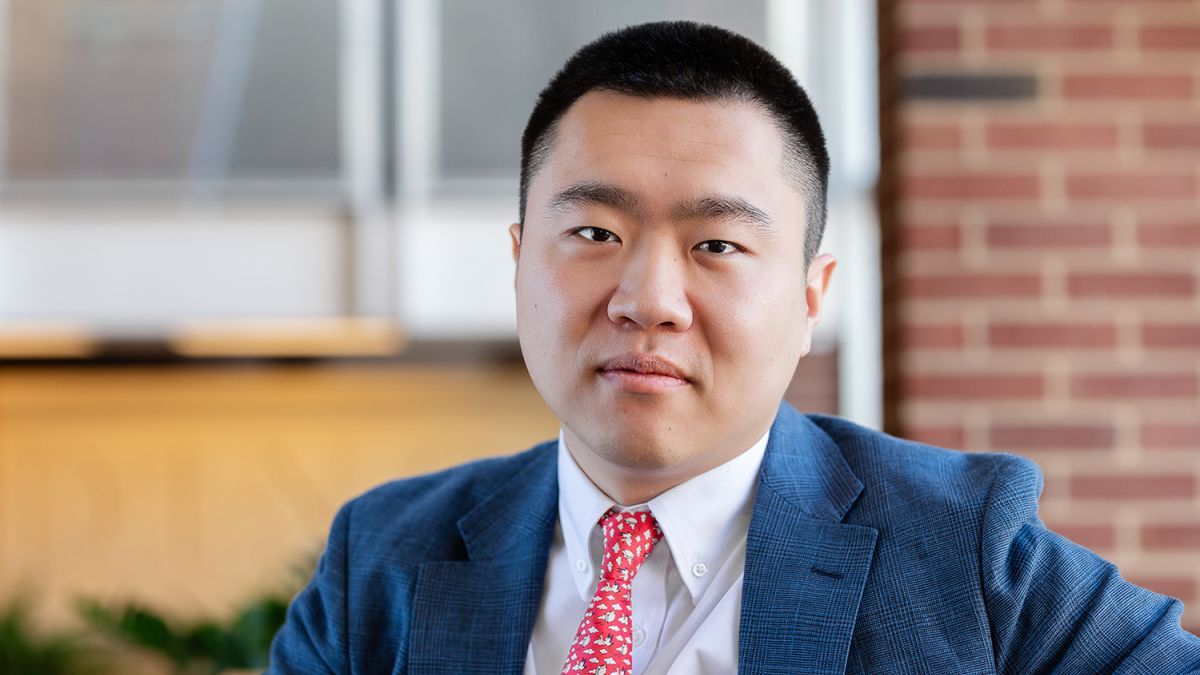
Incoming Assistant Professor of Law Jake Gao recently published his paper, Formal Neutrality and Unequal Liability: How Algorithmic Aversion Distorts Liability for Algorithmic Torts, in the Santa Clara Law Review, as announced by Pacific's newsroom on May 28, 2026. The scholarship arrives at a critical inflection point for autonomous vehicle regulation, as companies like Waymo expand robotaxi service throughout San Francisco and Sacramento — cities within direct reach of Pacific's three campuses.
What Is Algorithmic Aversion, and Why Does It Distort Liability?
At the heart of Gao's paper is a concept drawn from behavioral science: algorithmic aversion. Research has consistently shown that people tend to judge errors made by algorithms more harshly than identical errors made by humans. When a human driver runs a red light and causes a collision, juries and the public generally process the event through a familiar framework of negligence. When a self-driving car does the same thing, the reaction is often disproportionately severe — even if the algorithm's overall safety record is statistically superior to human driving.
Gao argues that this psychological bias doesn't just shape public opinion; it actively distorts how tort liability is applied. Under a doctrine of "formal neutrality," the law ostensibly treats human-driven and algorithm-driven accidents identically. But because juries, judges, and regulators bring algorithmic aversion into the courtroom, the practical outcomes are anything but neutral. Manufacturers and operators of autonomous vehicles may face systematically higher liability exposure, not because their products are more dangerous, but because human decision-makers are psychologically predisposed to punish algorithmic errors more severely.
This creates what Gao describes as "unequal liability" — a structural imbalance that could slow the adoption of technologies which, on a population level, have the potential to save tens of thousands of lives annually. According to the National Highway Traffic Safety Administration (NHTSA), over 40,000 people died in motor vehicle crashes in the United States in 2023, with human error identified as a contributing factor in approximately 94% of serious crashes. If algorithmic aversion causes courts to apply disproportionate penalties to AI systems that reduce that error rate, the result may be a perverse legal incentive to delay life-saving innovation.
Why Does This Research Matter for Pacific and Sacramento?
Gao's scholarship is particularly well-situated at Pacific's McGeorge School of Law, which has long been one of Sacramento's premier legal institutions. Sacramento is not only the state capital — where autonomous vehicle regulation is debated and enacted — but has also become a testing ground for AV deployment. California's Department of Motor Vehicles has issued dozens of autonomous vehicle testing permits, and Sacramento legislators are actively considering how to update the state's vehicle code for a future in which human drivers share the road with algorithmic systems.
By joining McGeorge's faculty on July 1, 2026, Gao brings a research agenda that directly intersects with the policy questions Sacramento lawmakers face daily. His focus on law and technology, with particular emphasis on how new technologies can be harnessed to enhance the law's ability to promote social welfare, positions him as a potential resource not only for students but for the broader legislative and regulatory community in Northern California. McGeorge has historically maintained strong relationships with the California State Legislature, the state judiciary, and the Governor's office — connections that amplify the real-world impact of faculty scholarship like Gao's.
For Pacific students, this hire reinforces the university's broader commitment to building interdisciplinary expertise at the intersection of technology and professional practice. Pacific's footprint spans Stockton, Sacramento, and San Francisco — three cities at the epicenter of California's technology economy — giving students and faculty unusual proximity to the industries and institutions shaping autonomous vehicle policy.
How Does Gao's Work Fit Into the National Legal Conversation?
The question of how tort law should adapt to artificial intelligence is among the most actively debated topics in American legal academia. Traditional negligence frameworks rely on the concept of a "reasonable person" standard, which assumes a human actor making decisions in real time. When the actor is an algorithm trained on millions of data points and executing decisions in milliseconds, the analogy breaks down in ways scholars are only beginning to map. Gao's contribution — zeroing in on the psychological mechanism of algorithmic aversion as a source of doctrinal distortion — adds a behavioral dimension to what has often been a purely doctrinal debate.
Publication in the Santa Clara Law Review is also noteworthy for its geographic and intellectual context. Santa Clara University's law review is based in the heart of Silicon Valley, and its editorial focus frequently intersects with technology, intellectual property, and innovation law. Placement in this journal signals that Gao's work is being recognized within the scholarly community most directly engaged with tech-sector legal issues. It also creates a natural bridge between Pacific's Sacramento-based law school and Silicon Valley's innovation ecosystem — a linkage that could benefit McGeorge students seeking careers in technology law, regulatory compliance, or policy advocacy.
The publication also arrives amid a wave of federal interest. In 2024 and 2025, Congress held multiple hearings on autonomous vehicle safety standards, and the NHTSA has proposed updated rulemaking for AV certification. Gao's framework for understanding how cognitive biases shape liability outcomes offers legislators and regulators a concrete analytical tool for evaluating whether existing legal standards inadvertently penalize algorithmic systems relative to human drivers.
What Does This Faculty Hire Reflect About Pacific's Academic Mission?
 Pacific has increasingly positioned itself as an institution that bridges professional education with advanced scholarship. The McGeorge School of Law joins the university's other nationally recognized professional schools — including a top-ranked pharmacy program and a highly regarded dental school — in emphasizing both academic rigor and practical relevance. Hiring a scholar whose research directly addresses one of the most consequential technology policy questions of the next decade is consistent with that mission.
It's also part of a broader pattern of Pacific investing in faculty who bring interdisciplinary perspectives. The university's relatively compact size — compared to large research universities — allows for more direct collaboration across departments and schools. A law professor studying algorithmic tort liability could, for instance, collaborate with Pacific's engineering or data science faculty to develop joint courses or research initiatives that give students exposure to both the technical and legal dimensions of autonomous systems.
This kind of cross-disciplinary depth is something Pacific alumni can take pride in. Whether you're a proud Pacific alum working in Sacramento's legal community or a current student exploring career paths in technology law, Gao's arrival signals that McGeorge is serious about building faculty expertise in the areas most likely to define legal practice in the coming decades. The university's community continues to make its mark in diverse arenas — from Pacific pharmacy students hosting a senior prom to Tigers athletes impressing at the professional level.
What Comes Next for Professor Gao and McGeorge?
Gao is set to begin his appointment at McGeorge on July 1, 2026, where he will join the faculty teaching courses connected to his research focus on law and technology. Given the pace of autonomous vehicle deployment in California — and the regulatory questions that accompany it — his classroom will have no shortage of real-world case studies to draw from. Sacramento's proximity to both the state legislature and Silicon Valley makes McGeorge an ideal platform for translating academic scholarship into policy influence.
For prospective students considering McGeorge, Gao's hire is a tangible indicator of where the school is directing its intellectual resources. As autonomous systems expand from vehicles into healthcare, finance, criminal justice, and beyond, the legal professionals who understand how algorithmic decision-making intersects with liability, regulation, and civil rights will be in extraordinary demand. Pacific's investment in this area of scholarship positions its law graduates to meet that demand — with the analytical tools and the institutional credibility to make a difference.
