


- Dignity Health St. Joseph's Medical Center will be the strategic clinical partner for the planned School of Medicine at University of the Pacific.
- Third- and fourth-year Pacific medical students will complete clinical rotations at St. Joseph's in Stockton and other hospitals throughout the region.
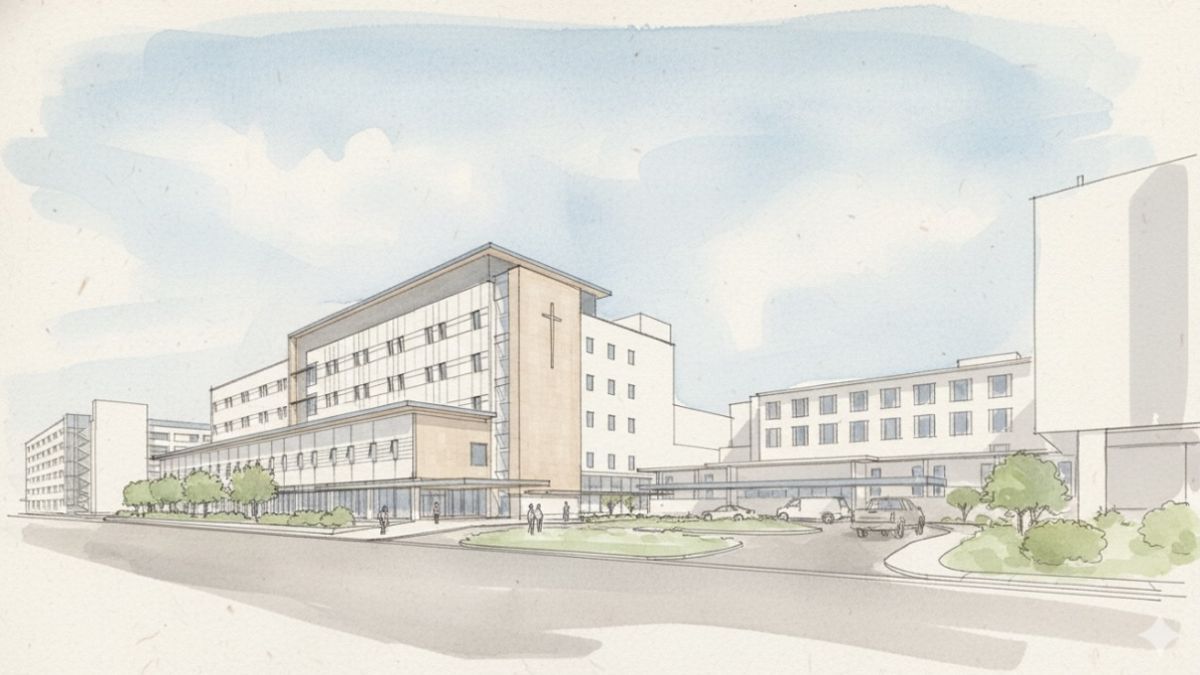
- St. Joseph's is a nationally ranked hospital undergoing a major expansion that will make it one of California's largest medical centers.
Program: Planned University of the Pacific School of Medicine
Clinical Placement: Third- and fourth-year students in hospital rotations
Announcement Date: May 28, 2026
Key Feature: New five-story patient care tower under construction at St. Joseph's
For decades, the University of the Pacific has built its reputation on the strength of its professional schools—among them a nationally recognized pharmacy program, one of the few dental schools on the West Coast, and a law school with faculty tackling emerging legal questions such as autonomous vehicle liability. Now, the Stockton-based university is poised to add one of the most consequential academic programs in its 175-year history: a School of Medicine. The announcement, made on Wednesday, May 28, 2026, that Dignity Health St. Joseph's Medical Center will serve as the school's strategic clinical partner, marks a critical milestone in turning that plan into reality.
The partnership signals more than an institutional agreement. It addresses a persistent physician shortage in California's Central Valley, connects a university with deep community roots to a hospital undergoing a transformative expansion, and positions Pacific alongside a small but growing cohort of universities adding allopathic or osteopathic medical programs in underserved regions. For current students, alumni, and the broader Stockton community, the implications are substantial.
Why Does Stockton Need a Medical School?
California's Central Valley is one of the most medically underserved regions in the state. According to data from the California Health Care Foundation, the San Joaquin Valley consistently ranks among the lowest areas in the state for physicians per capita—a problem that worsens as the population grows. Stockton, San Joaquin County's largest city, has experienced significant demographic growth over the past decade, yet its healthcare infrastructure has not kept pace. Training physicians locally is one of the most effective strategies for retaining them in the communities where they study, a phenomenon well-documented in medical education research.
Pacific's decision to pursue a School of Medicine is not an impulsive expansion; it is a strategic response to these conditions. By partnering with a hospital that is already embedded in the community—Dignity Health St. Joseph's Medical Center has served Stockton for more than a century—Pacific is building its clinical infrastructure on an established, trusted foundation. The university's existing health sciences programs in pharmacy and dentistry provide institutional knowledge about accreditation processes, clinical training pipelines, and interprofessional education models that most new medical schools would need years to develop.
What Does the Clinical Partnership Include?
Under the terms of the agreement announced on May 28, 2026, Dignity Health St. Joseph's Medical Center will provide clinical rotation placements for third- and fourth-year Pacific School of Medicine students. These rotations are the core of medical education's clinical phase, during which students move from classrooms and simulation labs into real-world hospital settings—working with patients, attending physicians, and multidisciplinary care teams.
St. Joseph's brings significant clinical volume and diversity to the partnership. The hospital is nationally ranked, and it is currently undergoing a major expansion that includes a new state-of-the-art, five-story patient care tower. Once completed, St. Joseph's will be one of California's largest hospitals, giving Pacific medical students access to a wide range of specialties, patient populations, and acute care scenarios. The expanded facility will also increase the number of available rotation slots, which is critical for any new medical school seeking Liaison Committee on Medical Education (LCME) accreditation.
Additionally, the agreement extends beyond St. Joseph's Stockton campus. Students will have the opportunity to rotate through other hospitals in the Dignity Health network throughout the region, broadening their clinical exposure and allowing for specialty training that a single institution might not fully support.
How Does This Fit Pacific's Broader Academic Mission?
Pacific has long positioned itself as a university where professional education and community impact intersect. The Arthur A. Dugoni School of Dentistry in San Francisco is one of the most respected dental schools in the country. The Thomas J. Long School of Pharmacy is among the oldest pharmacy programs on the West Coast. Both schools emphasize experiential learning—students in these programs are placed in clinical environments early and often. The School of Medicine, as currently planned, would follow the same model, and the Dignity Health partnership provides the clinical backbone to make that possible.
This approach also reflects a growing trend in higher education: universities with existing health sciences portfolios adding medical programs to create comprehensive health education ecosystems. The advantage is clear. Students across pharmacy, dentistry, and medicine can train together in interprofessional settings, learning to collaborate the way modern healthcare teams actually function. Pacific's relatively compact institutional size, compared to large research universities, could make this kind of cross-school integration more practical and more personal.
The community dimension is equally important. Pacific's campus culture places significant emphasis on service and local engagement—a value reflected across its programs. For example, Pacific pharmacy students recently hosted a senior prom for local elderly residents, illustrating the kind of community-oriented mindset the university cultivates. A medical school rooted in these values could produce physicians who are not only clinically skilled but deeply connected to the populations they serve.
What Does This Mean for Students, Alumni, and the Stockton Community?
 For prospective students, the planned School of Medicine at Pacific offers a distinctive proposition: medical education at a mid-sized private university with established health sciences programs, situated in a community where clinical need is real and immediate. The partnership with St. Joseph's ensures that students will not be relegated to observation roles or competing for limited rotation slots—they will train in a rapidly expanding, nationally recognized hospital system with deep regional roots.
For Pacific alumni, particularly those in health-related fields, the addition of a medical school elevates the university's profile in ways that benefit the entire institutional network. A medical school is often viewed as a marker of academic maturity and ambition, and its presence can enhance the perceived value of degrees across the university. Parents and families who are proud to support Pacific's growth may also appreciate gear that reflects their connection to the university—items like the Baby Burns Tower — a handcrafted miniature of Pacific's most iconic landmark — offer a timeless way to carry that connection.
For Stockton, the implications may be the most profound. A medical school embedded in the community, partnered with its largest hospital, creates a pipeline of physicians who understand the region's health challenges firsthand. Research from the Association of American Medical Colleges (AAMC) consistently shows that students who train in underserved areas are more likely to practice in similar settings after graduation. If Pacific can build a medical school that reflects this evidence, Stockton and the broader Central Valley could see meaningful improvements in physician availability over the coming decades.
What Comes Next for Pacific's Medical School Plans?
The Dignity Health partnership is a foundational piece, but significant milestones remain. Establishing a new medical school requires preliminary accreditation from the LCME, a rigorous process that evaluates everything from curriculum design and faculty recruitment to financial sustainability and clinical capacity. The St. Joseph's agreement directly addresses one of the most critical accreditation requirements—guaranteed access to high-quality clinical training sites—but Pacific will also need to demonstrate strength in basic science instruction, research infrastructure, and student support services.
President Christopher Callahan has made institutional growth and academic distinction central to his leadership agenda at Pacific, and the School of Medicine represents perhaps the most ambitious initiative in that vision. With construction of St. Joseph's new patient care tower underway and the clinical partnership now formalized, Pacific has cleared two of the most significant hurdles in the early stages of medical school development.
The road ahead will demand sustained investment, strategic hiring, and careful curricular planning. But the pieces are aligning in a way that suggests this is not aspirational rhetoric—it is a concrete institutional commitment. For a university that has spent more than a century building professional programs that serve both its students and its community, the School of Medicine may be the most consequential addition yet.
